What is Patellofemoral Arthroplasty?
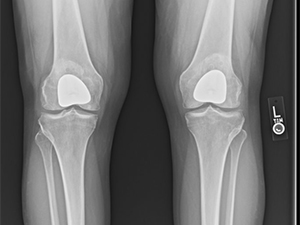
Patellofemoral arthroplasty is a partial knee replacement that focuses only on the front part of the knee—the joint between the kneecap (patella) and the thigh bone (femur).
Unlike a Total Knee Replacementt, this procedure preserves the healthy parts of your knee, allowing for a more natural feel and faster recovery in the right patient.
Who is a Candidate?
You may be a candidate if you have:
- Pain primarily in the front of the knee, especially with stairs, squatting, or rising from a seated position.
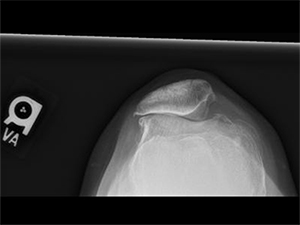
- Arthritis confirmed on imaging limited to the patellofemoral joint.
- Failed non-surgical treatments such as physical therapy, injections, or medications.
- It is not recommended if arthritis affects the rest of the knee joint or if there is significant instability or deformity.
The Surgery
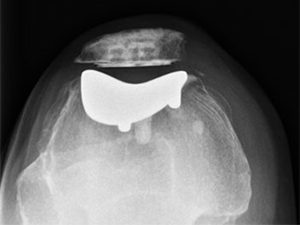
Patellofemoral arthroplasty is a minimally invasive procedure compared to Total Knee Replacementt.
During surgery:
- The damaged cartilage on the underside of the kneecap and the groove of the femur is removed.
- These surfaces are replaced with smooth metal and plastic components.
- The rest of the knee joint is preserved.
- The procedure typically takes about 1 hour, and many patients go home the same day.
Recovery and Rehabilitation
Recovery is generally faster than a Total Knee Replacementt, but still requires commitment to rehabilitation.
What to expect:
- Walking begins the same day or shortly after surgery
- Physical therapy is essential to restore motion, strength, and function
- Most patients regain good function by 8–12 weeks
- Patients can typically return to their desired activities as strength and comfort improve
Benefits
- Preserves healthy parts of the knee
- More natural knee motion
- Faster recovery compared to Total Knee Replacementt
- Less pain and improved function in appropriately selected patients
Final Thoughts
Patellofemoral arthroplasty can be an excellent option for patients with arthritis isolated to the front of the knee. Careful patient selection and dedicated rehabilitation are key to achieving the best outcome.